Educational Guide
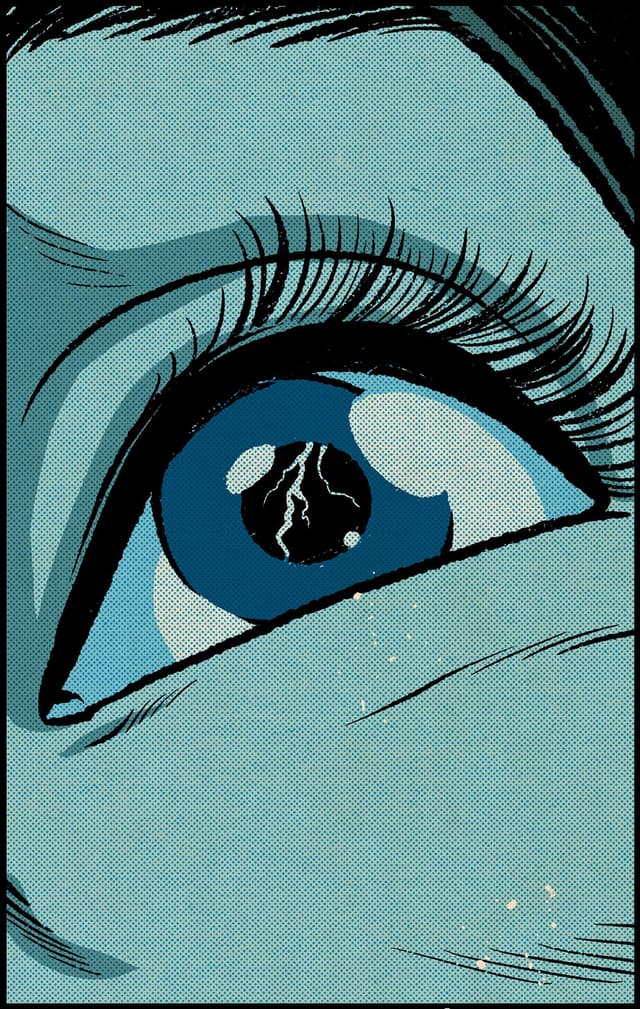
Jane Hawkins and the Pirate's Gold is Jason Neulander's newest "live-action graphic novel." Adapted from Robert Louis Stevenson's classic pirate story Treasure Island, this production features live voices, sound effects, and cinematic score as more than 1,200 comic-book images play out sequentially, projected on a huge screen, to tell the story in a multimedia spectacle like none other.
Download the Educational Guide PDF.
Recommended ages: Grades 5 and up, including middle- and high-school. Contact us for the graphic novel to use in the classroom before or after seeing the show.
Matinee performances for schools are available in the full-length, two-act version of the show (2 hours including intermission) or an abridged version (55 minutes).
This study guide is modeled on a program at the Kennedy Center.
The year is 1754. The place, the western shores of England. Jane Hawkins, twelve years old, works at a sleepy seaside inn. When a sinister vagabond arrives with a mysterious trunk, Jane's humdrum life swerves towards adventure…
Education Standards Alignment
National Core Arts Standards – Theatre
- Connecting (TH: Cn10.1.): Identify character emotions in a guided drama experience (e.g., process drama, story drama, creative drama) and relate it to personal experience
- Connecting (TH: Cn11.1.): Relate artistic ideas and works with societal, cultural, and historical context to deepen understanding
- Responding (TH: RE8.1.): Interpret intent and meaning inartistic work
- Creating (TH: CR1:) Generate and conceptualize ideas and work
- Creating (TH: CR2:) Organize and develop artistic ideas and work.
National Core Standards – Social Studies
Theme 1 (Culture): Understanding how culture shapes people’s beliefs, values, behaviors, traditions, and ways of life. Connection to theatre: stories from different cultures, folklore, traditions, and identity/identities.
Theme II (Time, Continuity, and Change): Understanding how past events, people, and ideas influence the present and future. Connection to theatre: historical settings, dramatization of past events, characters shaped by different time periods, and stories that explore change over time.
Theme III (People, Places, and Environments): Students examine geography and how environments affect people. Connection to theatre: settings, journeys, migration stories.
Theme IV (Development and Identity): Students understand how personal identity forms through experiences and culture. Connection to theatre: character development, empathy, perspective-taking.
Common Core English Language Arts Standards
- RL.1: Ask and answer questions to demonstrate understanding of key details in a text.
- RL.2: Analyze literary text development
- RL.4: Determine the meaning of words and phrases as they are used in a text, distinguishing literal from nonliteral language
- RL.5: Describe the overall structure of a story, including describing how the beginning introduces the story and the ending concludes the action.
- RL.6: Acknowledge differences in the points of view of characters, including by speaking in a different voice for each character when reading dialogue aloud.
- RL.7: Compare and contrast the experience of reading a story, drama, or poem to listening to or viewing an audio, video, or live version of the text, including contrasting what they “see” and “hear” when reading the text to what they perceive when they listen or watch.
- RL.10: activate prior knowledge and draw on previous experiences to make text-to-self or text-to-text connections and comparisons
- W.3.D: Use precise words and phrases, relevant descriptive details, and sensory language to convey experiences and events
- W.5: Add details and strengthen writing
- W.8: Recall information to answer questions
CASEL Competencies (Social and Emotional Learning)
Self-Awareness:
- Integrating personal and social identities
- Linking feeling, values, and thoughts
Social Awareness:
- Perspective-taking
- Demonstrating empathy and compassion
Relationship Skills:
- Communicating effectively
- Identifying solutions for personal and social problems
- Reflecting on one's role to promote personal, family, and community well-being
What to Expect
Performance
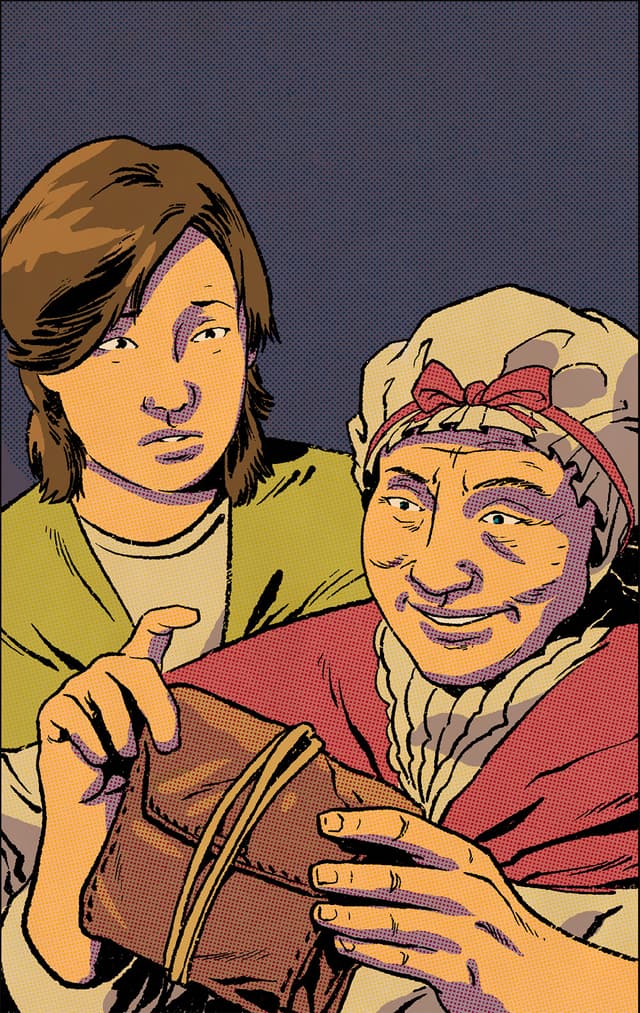
- The story is told through dialogue, sound effects, music, and projected comic-book artwork.
- The play is a swashbuckling adventure story with life-and-death stakes. Please be advised that the content includes what could be considered sensitive themes portrayed on stage, including sword fighting and gun fights (these are pirates, after all!).
Performers
- Three actors play multiple characters in the show. To become different characters, the actors change their voices and movements.
- The actors also make all of the sound effects that you'll hear during the performance.
Sound
- The performers sometimes illustrate strong emotions, like when Jane flees for her life from Israel Hands.
- The music during the performance is occasionally exuberant and can be loud for some audience members.
- The music and soundscapes throughout the performance include thunder, gunshots, and other loud noises.
Projection
- The entire story is shown through the sequential projection of more than a thousand comic-book images.
- Some of those images may be scary to some audience members.
What to Bring
Everyone is encouraged to bring any sensory or accessibility tools that will help make the experience comfortable for them. A few suggestions of items audience members may find useful include noise-canceling headphones, sunglasses or visors, fidgets, and communication devices.
Before the Performance
What to Look and Listen for:
- Keep an eye on the performers they use various instruments and objects to create the sounds in the show. How does your imagination help make those sounds part of the action and plot of the story?
- Listen for how performers switch up their tone, pitch, speed, and voice quality to bring a whole cast of characters to life on stage.
- Check out all of the innovative ways that technology is used in the production to take theatrical storytelling to the next level, like projections and sound effects.
After the Performance
Think About and Discuss:
- Which character in the play do you feel like you could relate to? Why?
- Did Jane change over the course of her experience? If so, how? What do you think she learned?
- Jane is given the option of growing up in English society or becoming a pirate. Given what you now know about her situation, what would you do if you were her? Why?
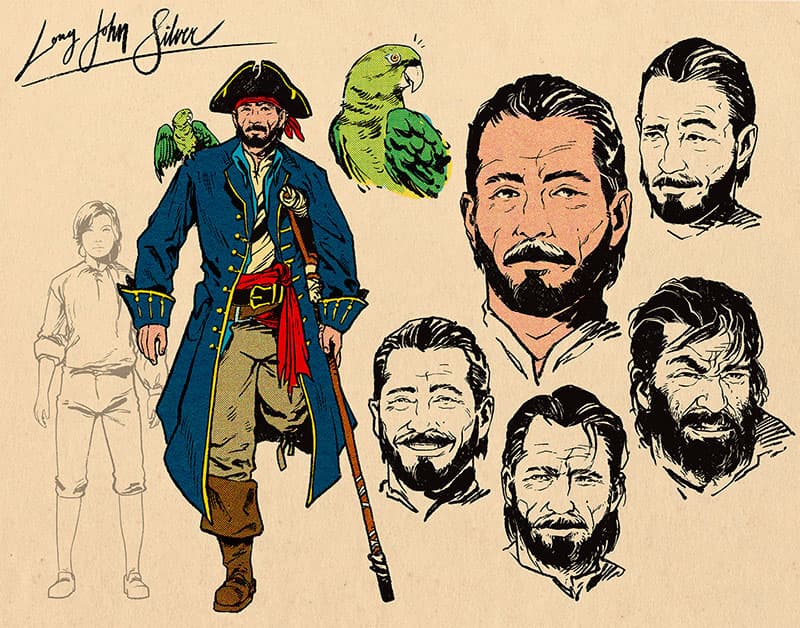
- Dr. Livesey and Long John Silver both serve as mentors to Jane in his own way? How did Jane respond to each of their points of view? How did you respond?
- In the original novel, the protagonist is named Jim Hawkins. How do you think the story changed with a female protagonist? What choices did Jane have to make simply because she was a girl?
The Real-Life History in "Jane Hawkins and the Pirate's Gold"
Pirates, corsairs, and privateers - the life of a seafaring outlaw. Piracy reached its peak in the Atlantic Ocean the middle of the 18th Century. Both in the European continent and in the Americas pirates and privateers were a common scourge to the law-abiding seaman. Unlike law-abiding ships, though, pirate ships operated as a democracy, with the sailors voting for their captain. Find out more about real life pirates (and their legalized counterparts, privateers) here: https://goldenageofpiracy.org
Women in British society in the 18th Century. In Jane Hawkins and the Pirate's Gold, Jane is a girl who gets to have a life-changing adventure. In real life, most girls didn't get those kinds of opportunities. They were expected to marry and bear children. When they got married, they and everything they owned became the property of their husband. Find out more about the lives of women in 1700s England: https://sites.udel.edu/britlitwiki/social-and-family-life-in-the-late17th-early-18th-centuries/
Real life female captains. In Jane Hawkins and the Pirate's Gold, Silver offers Jane the opportunity to become a pirate captain. In real life, one way that women could chart their own courses in 18th Century England was to become a pirate. And in fact, in real life there were female pirate captains. The most famous were Cheng I Sao, Anne Bonny, and Mary Read. Find out more about these and other female captains here: https://www.history.com/articles/5-notorious-female-pirates
Black People in British society in the 18th Century. In Jane Hawkins and the Pirate's Gold, Dr. Livesey is a free Black man. In real life in 1754, most Black people in Great Britain and its colonies were enslaved. Discover what life was like for Black people in 1700s England and the real-life free Black men on whom Dr. Livesey is based: https://www.english-heritage.org.uk/visit/places/portchester-castle/history-and-stories/black-people-in-late-18th-century-britain/
Try It Yourself
- Be a comic-book artist! create a comic-book version of a chapter of your favorite book. How does adding pictures change how you tell the story?
- Treasure Hunt: what's something you own that's valuable to you? Has owning it changed you? Hide it in your house and create a treasure map for it. Can any family members now find it?
- Write your own adventure. Have you ever done something exciting or thrilling? Write a version of that story with cliffhangers.
Continue exploring...
- Watch behind the scenes video of how the project was made.
- Read author Jason Neulander’s explanation of what he changed from the original novel and why.
- Read the graphic novel adaptation.
- Read the original novel by Robert Louis Stevenson.
Glossary of terms you may hear in the show
Aft - the direction of the stern of a ship (see Stern)
Black Spot - a scrap of paper marked with a black splotch of ink. Whoever receives the Black Spot will be killed by pirates.
Boom - a horizontal pole to which the bottom of a triangular sail is tied. It is connected to the lower part of the mast and used to control the sail relative to the wind.
Bow - the frontmost point of a ship
Bow-ports - windows at the bow of a ship
Bowsprit - the pole that extends forward from the bow of the ship, to which the jib is attached
Brace - a rope used to rotate a yard arm around a mast
Capsize - to roll a ship so hard that it flips sideways or upside-down in the water. Caused by huge waves, strong winds, or both. The sailors thrown overboard must be rescued or they will drown.
Cat-o-nine-tails - a whip with nine lashes, often used by the first mate on sailors on a ship when they misbehave
Clew - the aft corner of a sail
Deck - the floor of the open-air part of the ship
First Mate - the second in command on a ship, reports directly to the captain
Fore - the direction of the bow of a ship
Forecastle - the raised part of the deck at the bow of the ship
Fortnight - a period of time equal to two weeks
Furl - to bundle and tie up. Sailed are furled to a yard arm or boom when they are not in use.
Guy - a rope used to control a sail
Haul - to drag something in the water
Hawse-hole - a hole cut into the bow of a ship for ropes to pass through
Helm - the steering wheel, or tiller, of a ship
Hull - the main outer body of a ship
Jib - a sail at the bow of a ship, connected at one end to the bowsprit and the other end to the foremost mast.
Keel - the bottom part of the hull of a ship that keeps the ship from moving forward and not sideways in the water.
Keel-haul - a legendary form of punishment designed to strike fear in the hearts of sailors. A sailor is tied to a rope, thrown off the bow of a ship and dragged underwater, under the keel, to the back of the ship. There is no evidence this form of torture was ever used.
Knight-head - an upright piece of wood connecting the bowsprit to the bow of a ship
Leeward - the side of a ship protected from the wind
Lubber - a person who doesn't know how to sail
Main mast - the largest mast of a ship. On a three-masted ship, the middle mast.
Main-sail - the lowest and largest sail on the main mast of a ship
Mariner - a sailor
Mast - the pole to which the sails of a ship are attached
Nor'-easter - a vicious winter storm
Pieces of Eight - gold coins that can be broken into eight smaller pieces. Also a term for gold that has sunk to the bottom of the ocean in a shipwreck.
Pirates Code, The - the code of honor that the pirates in this story must abide by. Without its strict rules, pirates would descend into anarchy.
Port - the left side of a ship, looking towards the bow
Pox - small pox, a deadly disease now eradicated because of vaccines
Reef tackles - ropes used to make a sail smaller when the wind threatens to capsize a ship
Royal - a small sail flown at the top of a mast
Rudder - the part of the ship used to control direction in the water
Quarterdeck - the raised part of the deck at the aft of a ship. Often, the captain's quarters will be directly under it.
Schooner - a type of ship that has triangular, not square, sails, sits lower in the water than a ship with square sales, and is faster than a ship with square sails
Scupper - an opening in the side of a ship that allows water to drain
Scurvy - a disease caused by a lack of Vitamin C, often suffered on a ship due to a lack of fresh citrus fruit
Sheet - the rope that controls a sail of a ship to take best advantage of the wind
Snuff - powdered tobacco sniffed by men and women in the 18th Century
Squall - a storm at sea
Starboard - the right side of a ship, looking towards the bow
Stern - the back wall of a ship
Stockade - a building used to protect its inhabitants
Studding sail - an extra sail used in good weather to take better advantage of the wind
Tiller - the steering wheel on a ship
Unfurl - to untie and drop or raise a sail so that its full surface can be used to catch the wind
Weather-eye - a careful watch for something
Windward - the side of a ship that the wind is blowing from, in a strong wind the side that can get the most damage
Yard Arm - the horizontal bar from which square sails hang when unfurled and to which sails are tied when furled. It runs across the mast. Large ships will have three or four per mast, one for each of the sails. Also simply called a yard.